

Why the Slowest Building Years Can Be the Best Years to Own
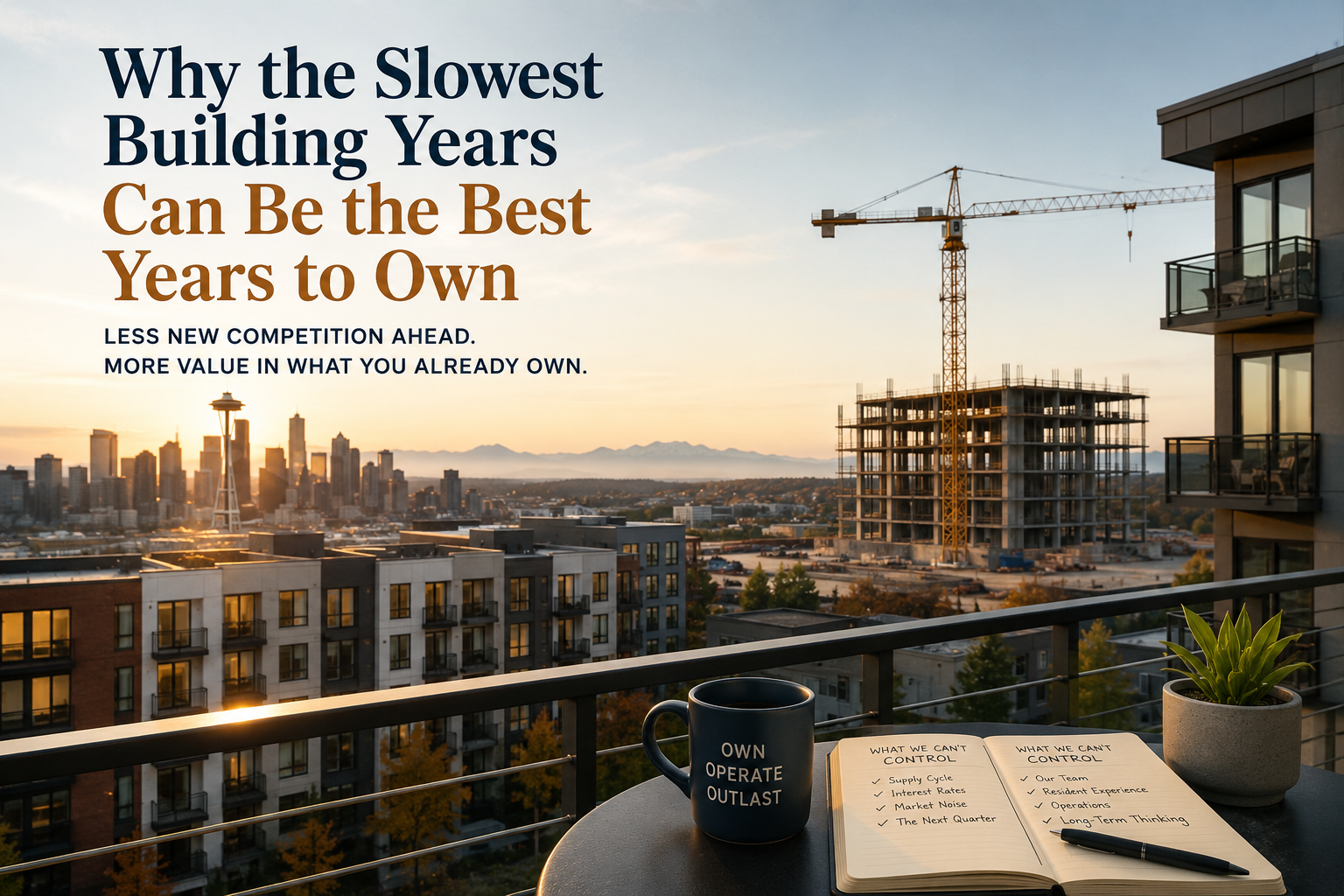
Apartment community under construction, representing the slowing multifamily building cycle in 2026
Why the Slowest Building Years Can Be the Best Years to Own
There is a lot of conversation in the industry right now about supply. About how much got built. About what happens next.
I have been thinking about it from a different angle.
Not how much is standing today. How little is starting tomorrow.
The Part Everyone Feels
The last few years brought a wave of new apartments. In a lot of markets, it felt like something new opened every few months.
That is the part everyone feels. More competition. More concessions. More pressure to hold rents and hold residents at the same time.
It was real. It still is, in some places.
But a wave is a moment, not a permanent state.
The Part Fewer People Are Watching
Here is what I keep coming back to.
In many markets, it now costs more to build a new community than it would to buy an existing one. When that is true, new construction slows down. Not because anyone decides it should. The math just stops working.
You can already see it. Fewer projects breaking ground. Fewer cranes. Pipelines that were full a couple of years ago starting to thin out.
It is the pattern I keep returning to when I think about what operators should know about the multifamily market heading into 2026. The competition an owner worries about is the competition that actually gets built. And less of it is getting built.
Two Markets, Two Stories
I think our two regions tell this in different ways.
In the Northwest, the slowdown feels structural. Between the cost to build, the time it takes, and everything that has to line up, new supply is hard to justify right now. In the Seattle area especially, it is the economics of new development doing the constraining. Building costs are elevated, the approvals are slow, and when replacement cost sits above what a finished community is worth, the projects simply do not pencil. That kind of constraint does not reverse quickly.
Phoenix is its own story, and I would not put it in the same category today. I would not call Phoenix supply constrained right now. It is still working through a wave of recent deliveries. What I see there looks more like a normalization. Demand has been catching up, the pipeline ahead is thinning, and units under construction are declining. It is a market finding its balance again, which is part of why I keep saying Phoenix multifamily is in a different season than the Northwest.
Different causes. Different timing. But on one thing they point the same way. Less new competition ahead than behind.
What This Means If You Own
None of this makes the next quarter easy. I want to be honest about that.
But it changes the horizon.
If little is being built, then the community you already own gets harder to replace. The occupancy you earn now sits on ground that costs more to build on than it used to, and that is worth something over time.
I want to be careful here. Slower supply is not a promise that rents, occupancy, or values go up. Those still depend on demand, the wider economy, and how a community is actually run. It changes the horizon. It does not guarantee the outcome.
So it is not a reason to relax. It is a reason to take care of what you have. The basics. The team. The resident experience. It comes back to something I believe about the discipline behind multifamily excellence, which is that it is usually quiet, and it usually shows up in the things that hold when the cycle turns.
Because usually, by the time everyone agrees it is a good time to own, the window has already moved.
Final Thought
I try not to get too caught up in any single quarter. The building cycle is longer than that, and it tends to reward patience more than reaction.
Right now the loudest story is about how much got built. The quieter story, the one I find more interesting, is how little is starting.
I would be curious how others are reading it. Are you seeing the slowdown in your markets yet, or does it still feel like a supply story where you are?
A Few Questions I Hear About This
Is apartment construction actually slowing down in 2026?
Yes. In many markets, new apartment construction is slowing, mainly because it now costs more to build than the finished value supports. Starts have pulled back, pipelines are thinning, and fewer projects are breaking ground than a couple of years ago. It does not mean nothing is being built. It means less is starting.
What does replacement cost mean for apartment owners?
Replacement cost is what it would take to build the same community new today. When that number sits above what existing communities are worth, new construction becomes hard to justify, and the supply that would compete with you tomorrow does not get started. That is the quiet advantage of owning something that is already standing.
How is Seattle apartment supply different from Phoenix?
They are not the same story. In the Seattle area, the constraint feels structural, driven by the economics of building, so new supply is hard to justify and slow to return. Phoenix is working through a wave of recent deliveries and moving toward balance as demand catches up, with a slowing pipeline ahead rather than a supply shortage today.
Does slower construction guarantee higher rents or property values?
No. Less new supply can ease future competition, but it does not promise higher rents, occupancy, or values. Those still depend on demand, the broader economy, and how well a community is run. I try to treat slower supply as a change in the horizon, not a guarantee.
Melanie Prock
President | Pillar Communities